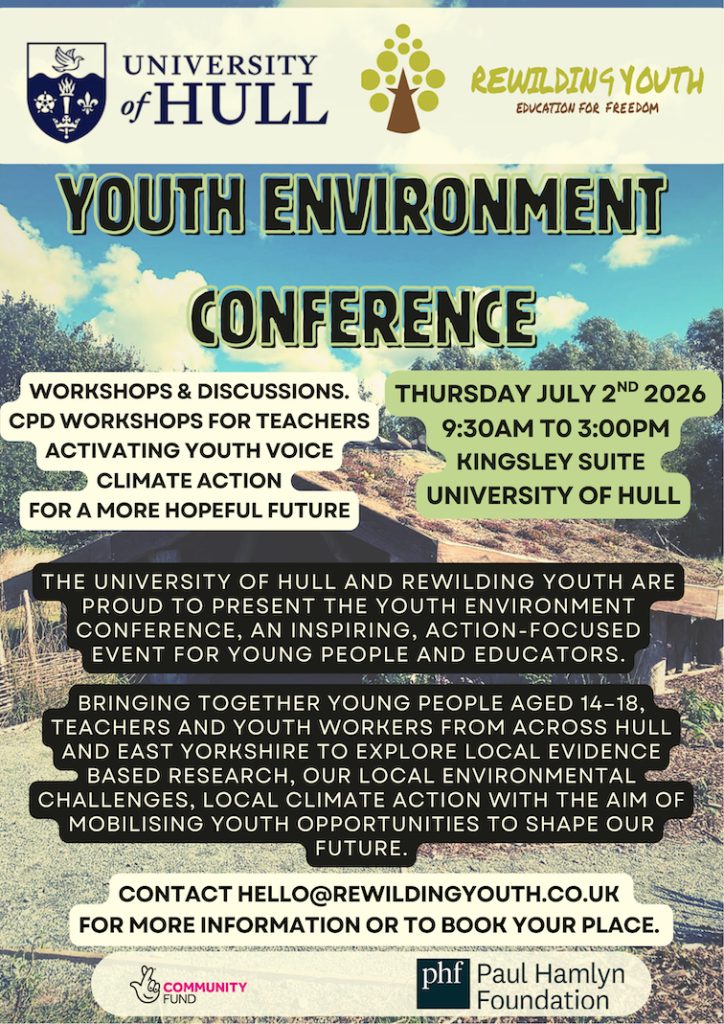
Want to help your local wildlife and community?

Join COEXIST as a volunteer! 

Posted on behalf of the COEXIST network, this is not an MWN related activity!

Local volunteers are invited to take part in COEXIST, a nationwide programme monitoring human-wildlife encounters in the UK. COEXIST takes a multidisciplinary approach, combining cutting-edge technology, field methods, and community engagement to understand where and why these encounters occur. We bring together local residents, universities, councils, and wildlife  organisations to support human-wildlife coexistence in an ever-changing world. 

What will volunteers do? You will join our team and be trained to help monitor wildlife behaviour in your local area, such as deploying and checking equipment (e.g., trail cameras, puzzle feeders, or acoustic recorders). You will also help us distribute fliers within these same locations to encourage residents to complete a short (<10min) online questionnaire about their experiences and attitudes towards local wildlife. You will help record local environmental characteristics, such as the presence of food, shelter, and other resources available to wildlife. Finally, you will help manually code and upload your observations to our secure online dashboard where councils and conservation partners can use the data to help guide locally tailored strategies to promote coexistence. All equipment will be provided, and we will train you through a series of workshops, video tutorials, and online guides before you begin.

Why it matters: Urban growth, climate change, and nature restoration are changing where wildlife live in the UK, creating more opportunities for people and wildlife to encounter each other. While many human-wildlife encounters can be positive or neutral (e.g., bird watching), others can lead to conflict (e.g., animals raiding gardens, bins and chicken coops). Nationally, human-wildlife conflicts cost millions (£) per year to manage, and yet many of these costs could be avoided through early detection and simple preventative measures where wildlife and people can both benefit. Local authorities, such as councils and conservation organisations, often lack the resources to systematically monitor these human-wildlife interactions, limiting their ability to help communities respond with early, locally tailored strategies to reduce conflict and promote coexistence. By enabling residents to take an active role in helping to collect data within the local area, COEXIST opens a two-way dialogue between communities and local authorities, helping to guide more effective, targeted actions while giving residents an active voice in shaping how wildlife and communities thrive together.

How much time is required? Volunteers will typically spend approximately 25 hours in total (~2-4 hours per week for 8 weeks) during April and May, which includes your training. While the time commitment per week is important to ensure data are collected reliably and on time, individual tasks can be broken into short, flexible sessions, and the specific days and times can be arranged to suit your availability within each week.

Who can volunteer? You must (1) be 18 years or older, (2) have a smartphone and computer for data collection, (3) be able to travel (~1-5km) to one of our study sites within your local area, (4) be able to commit ~2-4 hrs per week for 8 weeks, (5) be physically able and willing to work safely during daylight hours and in variable weather, and (6) have a keen interest in wildlife and outdoor activities.

What’s in it for you? Volunteering with COEXIST lets you make a real difference to local wildlife and your community. By joining the team, your observations will help local authorities, such as city councils and conservation organisations, understand where and why human-wildlife interactions occur. This information can then be used to help inform effective and environmentally responsible strategies to support people and wildlife living together. You will gain hands-on experience in wildlife monitoring and citizen science. You will see how data and technology are used to understand and reduce human-wildlife conflicts, and you will develop practical skills in animal observation, field methodology, and environmental problem-solving with other like-minded volunteers.

Ethics and governance. COEXIST is ethically approved by the University of Hull and complies with all GDPR and animal welfare regulations from the UK government. All study sites have landowner permission and local authority involvement.

Interested? Questions about volunteering for COEXIST should be directed to Dr Blake Morton (b.morton@hull.ac.uk) at the University of Hull. If you wish to volunteer, you will be required to read and sign a volunteer notice, which provides more information and sets out a number of policies and guidelines. Dr Morton’s staff profile can be found at: https://www.hull.ac.uk/staff-directory/blake-morton
Last Chance: Have Your Say on the Dogger Bank South Community Fund

The developers behind the proposed Dogger Bank South offshore wind farms are asking local residents what they’d like to see from a community benefit fund, and the consultation closes TODAY!

What’s This All About?

The Dogger Bank South (DBS) projects are a pair of proposed offshore wind farms being developed by RWE and Masdar, located over 100km off the East Yorkshire coast in the North Sea. If approved and built, they could generate enough renewable electricity to power around three million homes.

As part of the development, RWE and Masdar are proposing a community fund of up to £1 million for communities near the projects’ onshore infrastructure. The onshore converter stations would be located to the southwest of Beverley, near the village of Bentley, so it’s the communities in that area who stand to benefit.

Why Should Wildlife Lovers Care?

This is where it gets interesting for us. The consultation is asking local people what the fund should be spent on and how it should be managed. That means there’s a real opportunity here to push for nature recovery, habitat restoration, wildlife-friendly green spaces, or community growing projects or whatever matters most to your local area.

Community funds like these don’t come along every day, and if local wildlife and conservation groups make their voices heard, there’s genuine potential to secure funding that benefits both people and nature. Think pollinator corridors, wetland restoration, community orchards, wildlife education programmes — the possibilities are exciting.

How to Have Your Say

You can fill in the online survey here: Dogger Bank South Community Fund Consultation

Entangled Hull and East Riding

If you’re anything like us, you’ve probably noticed how the best wildlife corridors in our area aren’t always in nature reserves, sometimes they’re tucked between allotment plots, winding through community gardens, or popping up in the most unexpected urban corners. That’s exactly the kind of thing a brilliant new series of free workshops is setting out to explore this spring, and we wanted to make sure it’s on your radar.

“Entangled” Where Food Growing Meets Nature Recovery

Entangled is a series of four free workshops running across Hull and East Riding from late April through to the end of May. Led by Claire Gribben, a teaching fellow in Sustainable Cities and Food Systems and PhD researcher at the University of Leeds, these sessions dig into the fascinating relationship between urban food growing and nature recovery. If you’ve ever wondered whether your veg patch is doing more for local biodiversity than you realise, this is your kind of event.

Claire is no stranger to our patch, either. She’s a former coordinator of Hull and East Riding Friends of the Earth and has spent years researching urban agriculture and its links to the natural world. So expect proper, grounded knowledge, not just theory.

Each workshop runs for about four hours and includes a shared lunch, which sounds like a lovely way to meet like-minded people in your area.

The Dates and Venues

Friday 24th April, 11am–3pm Learning Resources Centre, Eppleworth Road, Cottingham, HU16 5YF (at Worklink Cottingham)

Friday 1st May, 11am–3pm Bowling Pavilion, Pearson Park, Hull, HU5 2SY

Monday 18th May, 12:30pm–4:30pm TimeBank Hull & East Riding, 24 Swanfield Road, Hull, HU9 4PX (at Marfleet Community Centre)

Saturday 30th May, 11am–3pm Beverley Minster Parish Hall, 38 Highgate, Beverley, HU17 0DN

We talk a lot on this blog about supporting local wildlife, hedgehog highways, pollinator-friendly planting, leaving the wild edges alone. But the conversation about how our food-growing spaces fit into the bigger picture of nature recovery is one that doesn’t get enough attention. These workshops look like a great chance to think about that connection in a really hands-on, community-focused way.

All four events are completely free, but you’ll want to grab a ticket through Eventbrite to secure your place. You can find all the details and book at: Entangled — Hull and East Riding on Eventbrite

We’re not involved in organising these events — we just think they’re well worth shouting about. See you there, perhaps!

MWN nominated for HEY Charity Awards

We’re thrilled to share some wonderful news Molescroft Wildlife Network has been shortlisted for the Environmental Award at the HEY Charity Awards 2026!

We were over the moon when the nomination came through. To know that the work we do for local wildlife and green spaces has been recognised in this way is a real honour, and it means the world to everyone involved.

Of course, none of this would be possible without the incredible support of our volunteers, members, and the wider Molescroft community. Every hedgehog surveyed, every wildflower planted every bioblitz of our areas, it all adds up, and this shortlisting is a reflection of what we’ve achieved together.

We don’t yet know the outcome, but regardless of what happens on the night, just being shortlisted is something we’re genuinely proud of. It’s a lovely reminder that the small things really do make a difference. We’ll keep you posted as we hear more. In the meantime, thank you, all of you, for being part of this. This one’s for the whole network.

MWN recieve £1000 from the Dogger Bank Fund

We’re delighted to announce that we have been granted a £1000 award from the Dogger Bank Wind Farm Operator Fund for Molescroft Wildlife Network.

Rick was our lead applicant for this, and one of the newest MWN members, so we’re incredibly grateful for him pulling together our application.

This grant was specifically put in to allow us to purchase equipment for our site manangement, seeds for planting (pending the success of our attempts at Millenium Wildlife Haven!) as well as volunteer events.

We’re incredibly grateful to the DBWFOF for this money, it’s a significant amount to a small group like ours and we can’t wait to put it to good use for our local residents and biodiversity.

Upcoming events on badger protection

These events are run by Paul Bateman, Rural & Wildlife Crime Co-ordinator, Crimestoppers (Humberside Committee). Please consider signing up if you would be interested in an active role in badger protection.

Both events take place at Rawcliffe Village Hall DN14 8QR.

  • Badger Crime Training Workshop with Crime Scene Awareness, 22nd March
  • Badger Persecution & Wildlife Crime Scene Awareness Training Inc Practical, 26th April

MWN Reflections morning

Sometimes it is hard to find time to reflect on what you have achieved and where you are going in life, but it is an important thing to do. This morning some of the MWN Trustees met to look at what had gone well and maybe what hasn’t gone so well for MWN over the last couple of years, and look at what parts of our work we needed to persevere with and which bits maybe we should think about ‘pruning back’ so that we maintain the goals and focus of our Small Charity Charter.

It was a productive 3 hours. There’s lots of enthusiasm to continue working on our management plans, and how we can organise ourselves more effectively for nature.

We’d like to say a big thank you to Martin Smith for facilitating the session (and Karyn and Steve for the pre-work), and also the very welcoming team at Gemini Chocolate, for use of their “Upstairs at Gemini” space that was just perfect for the morning.

Steve, Andy (Yorkshire Wildlife Trust), Angie, Sharon, Dan, Karyn and Helen.

Love Your Yew Week 2026

For the second Love Your Yew Week, the Ancient Yew Group and Caring for God’s Acre, is asking custodians of ancient and veteran yews to clear beneath the canopy—removing all objects at least a metre beyond the branches, as roots extend further than the canopy.

England and Wales host around 800 of these churchyard yews, making Britain a global stronghold for veteran yew trees. They’re a national treasure deserving recognition and celebration.

Each year the Ancient Yew Group suggests one achievable management task. February is ideal, before nesting season and typically quieter for other work. Participants receive a certificate to display, highlighting these remarkable trees.

Please join in and send them before and after photos! They’d love to see people in your photos (with their permission, as these go on their website). For more information see: https://www.caringforgodsacre.org.uk/love-your-yew-week/

Local Nature Photography Competition 2025 – Winners!

Well this was a lovely surprise! Hull & East Yorkshire Local Nature Recovery Strategy runs an annual Local Nature Photography Competition.

You can see the winners across all categories here.

You may spot some familiar faces in the Volunteering 26+ category! This was taken at MWN’s “Creatures of the NIght” event and features MWN volunteers, some of our fantastic speakers, and the bat box making maestro Andy from YWT!

The judges said “The judges really thought your photo with the bat boxes showcased a perfect example of volunteering action.” We think so too. Thank you HEY LNRS!